Last Tuesday, over coffee in a small café in California, a colleague shared his struggle: ten years of chasing “passive income” left him more tired than his old 9-to-5. His rental property demanded endless repairs, and dividend stocks barely kept pace with inflation. He sighed, “I’m working harder to maintain my passive income than I did at my job.”
That moment reminded me: in 2026, the old rules don’t work anymore. Passive income today requires smarter tools, diversified strategies, and a willingness to adapt to AI-driven markets. If you want income that truly flows while you sleep, you need to embrace the New Pillars of Wealth.
For example, US investors often use dividend ETFs like VYM or SCHD and REITs such as Digital Realty to generate stable income streams.
1. The Rise of Agentic Digital Assets
In 2024, AI blogs were the rage. By 2026, the real opportunity lies in Agentic Assets—specialized AI agents or micro-tools that solve one problem, like automating tax-loss harvesting for freelancers or managing Airbnb pricing dynamically.
Low-code platforms make this accessible. Imagine building a tool that charges $5/month. With 200 users, that’s $1,000/month in relatively low-maintenance income. Unlike blogs, these tools don’t demand daily updates to stay relevant.
Caution: Returns depend on execution and market conditions. Potential yields may range between 15–30% depending on adoption and sustainability.
2. Real-World Assets (RWA) Yield Farming
Tokenization has transformed access to private credit and infrastructure projects. Instead of needing millions, you can now buy fractional shares in loans or renewable energy projects.
In 2026’s high-interest environment, private credit yields may range between 9–12% annually—higher than savings accounts and steadier than volatile crypto markets.
Important: Always verify legal and regulatory compliance in your country before investing in tokenized assets.
3. High-Yield Data Center REITs
AI runs on servers, and servers need space. Data Center REITs own the warehouses powering OpenAI, Google, and Meta. They pay out 90% of taxable income as dividends.
Well-known REITs like Digital Realty and Equinix are commonly used by investors seeking exposure to data center infrastructure and consistent dividend income.
For investors, this is “digital rent” without the headaches of tenants or plumbing repairs.
Note: REITs can be sensitive to tech downturns. Diversification remains essential.
4. Comparison: Which Strategy Fits Your Lifestyle?
| Income Source | Effort to Start | Risk Level | 2026 Potential Yield |
|---|---|---|---|
| Digital Micro-Tools | High (Time) | Low | Potential 15–30% depending on execution |
| Data Center REITs | Low | Medium | 5–8% |
| Private Credit (RWA) | Medium | High | Potential 9–12% depending on market |
| Dividend Index Funds | Low | Low | 3–5% |
5. Why Conventional Wisdom is Wrong
Many “gurus” still push YouTube or dropshipping as passive income. In 2026, these are full-time hustles. Dropshipping margins have become extremely thin due to rising costs and global shipping challenges.
YouTube demands constant uploads to satisfy algorithms. If you’re working 20 hours weekly, it’s not passive—it’s a side hustle.
True passive income today is about Capital Allocation (putting your money to work) or Product Creation (building a tool once that sells forever).
6. The Anti-Fragile Passive Income Stack
To stay financially healthy, you shouldn’t rely on just one source. Consider the 3-Tier Stack:
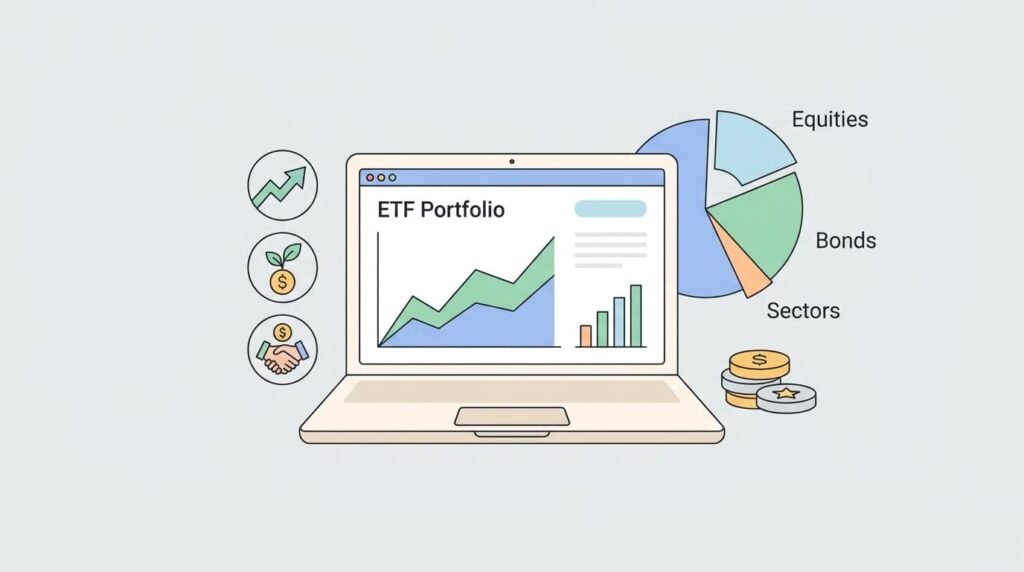
- The Foundation (Safety): 50% in Dividend ETFs and High-Yield Savings. This pays your core bills. See our Diversified ETF Portfolio Guide.
- The Growth (Scale): 30% in REITs and tokenized real estate.
- The Moonshot (High Return): 20% in digital assets or private credit.
Key Takeaways
- Passive income in 2026 requires diversification and adaptability.
- Traditional methods alone are no longer sufficient.
- Combining ETFs, REITs, and digital assets improves stability.
- Consistency and long-term thinking are key to success.
Conclusion: The Best Time to Start was Yesterday
Global economic shifts—inflation, AI, and interest rate changes—are intimidating. But for the informed investor, they are opportunities.
Passive income in 2026 isn’t about finding a magic button. It’s about understanding where the world is going and placing your capital accordingly.
Don’t wait for perfect conditions. Start small, stay consistent, and let compounding do the heavy lifting.
Disclaimer: This article is for educational purposes only. The 2026 market is volatile; always do your own research before investing.
Author: Fiscal Guider Research Team
Reviewed by: Independent Market Analyst