Investing in ETFs in 2026 isn’t about chasing the hottest trend—it’s about building resilience while staying open to innovation. The global economy is facing a “triple threat”: cooling but persistent inflation, fragmented supply chains, and AI shifting from hype to a real earnings driver. In this environment, diversification is no longer optional—it’s essential.
In my experience, many beginners overcomplicate ETF investing by chasing trends instead of focusing on consistency. A simple diversified approach often performs better over time.
1. The Macro Landscape of 2026
Before picking ETFs, it’s important to understand the backdrop:
- Valuations are stretched: Major indices like the S&P 500 remain resilient, but prices are high.
- Regionalization: Global trade is moving toward regional hubs. Broad “Ex‑US” funds are less effective—you need targeted exposure to regions like India, Japan, or Southeast Asia.
- AI maturity: The winners are no longer just chipmakers, but companies integrating AI to boost profits.
2. The Core-and-Satellite Strategy
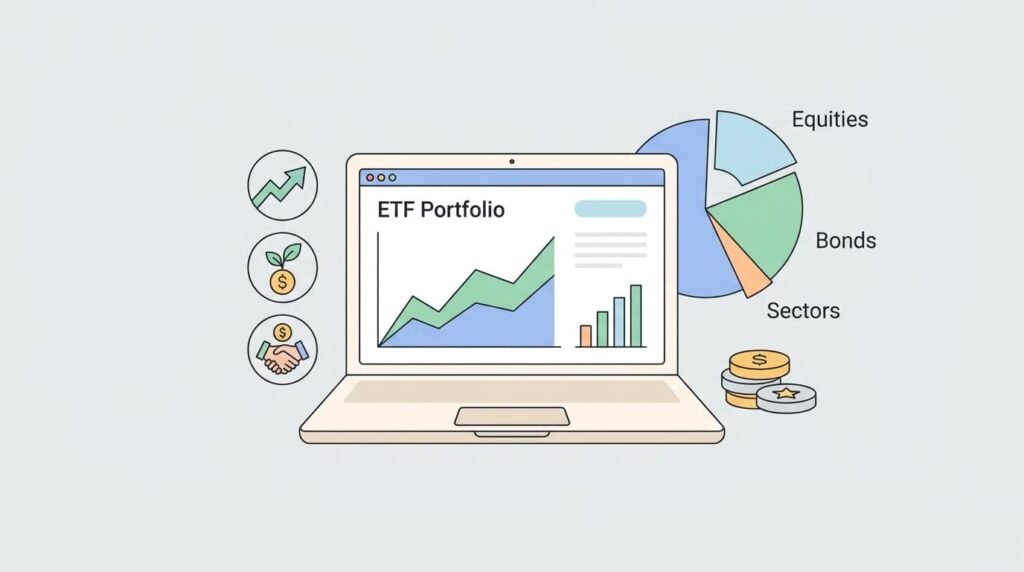
Think of your portfolio in two parts: the “core”—your foundation—and the “satellites”—your tactical tilts.
The Core (70–80% of Portfolio)
- Total US Stock Market ETFs (e.g., VTI, IVV): Exposure to thousands of US companies.
- Total International Stock Market ETFs (e.g., VXUS): Growth outside the US, especially Europe and Japan.
- Aggregate Bond ETFs (e.g., BND): With rates stabilizing, bonds provide steady income and capital preservation.
The Satellites (20–30% of Portfolio)
- Thematic Technology: AI infrastructure, cybersecurity, robotics.
- Dividend Growth ETFs: Steady cash flow and volatility buffer.
- Hard Assets: Gold or commodity ETFs to hedge against geopolitical shocks.
3. Top ETF Categories to Consider
A. The Tech Evolution
In 2026, focus has shifted from “Big Tech” to “Smart Tech.”
- Data Centers & Utilities ETFs: AI requires massive electricity and infrastructure.
- Cybersecurity ETFs: Spending on security is now a necessity, not optional.
B. Fixed Income and Cash-Like ETFs
- Short-Duration Bonds: Protection if inflation lingers.
- Dividend Appreciation ETFs: Companies with a track record of increasing dividends.
C. Emerging Markets Tilt
- India ETFs: Nifty 50 and mid-cap sectors are projected to grow strongly.
- ASEAN ETFs: Vietnam and Indonesia benefit from “China Plus One” strategies.
D. Defensive & Low-Volatility Sectors
- Healthcare & Consumer Staples ETFs: Demand remains steady regardless of the economy.
- Low-Volatility ETFs: Select stocks with smaller price swings.
E. Hard Assets and Commodities
- Gold ETFs: Classic hedge against uncertainty.
- Copper & Green Metals ETFs: Essential for EVs and energy transition.
4. Step-by-Step Guide to Building Your Portfolio
Step 1: Define Your Risk Tolerance
Be honest with yourself. How would you react if your portfolio dropped 20% in a month?
Risk Profiles and Suggested Allocations (2026)
| Investor Type | Equities | Bonds | Commodities |
|---|---|---|---|
| Aggressive (20–35 yrs) | 90% | 5% | 5% |
| Moderate (35–50 yrs) | 70% | 25% | 5% |
| Conservative (50+ yrs) | 50% | 40% | 10% |
Step 2: Selection (The Low-Fee Rule)
In 2026, returns may be modest (6–8%). Fees matter. A 0.50% difference in expense ratios can cost tens of thousands over 20 years. Prioritize ETFs with expense ratios below 0.20% for core holdings.
Step 3: Global Allocation
Avoid “home bias.” Suggested split:
- 60% US Exposure
- 25% Developed International (Europe, Japan)
- 15% Emerging Markets (India, Southeast Asia)
Step 4: Automate and Rebalance
Set up recurring investments (Dollar Cost Averaging). Rebalance every six months so satellites don’t overwhelm your core.
5. Sample 2026 Portfolio Models
| Allocation Type | ETF Category | Percentage | Purpose |
|---|---|---|---|
| Core | Total US Stock Market (VTI, IVV) | 40% | Broad growth & stability |
| Core | Total International Stock (VXUS) | 20% | Global diversification |
| Core | Aggregate Bond Fund (BND) | 15% | Income & risk reduction |
| Satellite | AI & Tech Infrastructure | 10% | Growth opportunities |
| Satellite | Dividend Appreciation | 10% | Cash flow & inflation hedge |
| Satellite | Gold / Commodities | 5% | Geopolitical insurance |
6. Common Pitfalls to Avoid
- Chasing Last Year’s Winners: A stock that doubled in 2025 may not repeat in 2026.
- Over-Concentration: Avoid overlapping ETFs that all hold the same top tech stocks.
- Ignoring Tax Efficiency: Use tax-loss harvesting to offset gains with losses.
7. Anecdotes and Analogies
Many investors in 2025 chased AI chip stocks, only to see them flatten in 2026. Diversification protects against such surprises. Think of your core ETFs as the foundation of a house, and satellites as the rooms you decorate according to your taste.
For a broader economic perspective, read our article Why Rich Countries Tax More But People Still Happy.
Frequently Asked Questions (FAQs)
Is ETF investing safe in 2026?
ETF investing is relatively safe compared to individual stocks due to diversification, but it still carries market risks.
How many ETFs should I hold?
Most investors can build a strong portfolio with 5–10 ETFs covering different asset classes.
What is the ideal ETF allocation?
This depends on your age, risk tolerance, and financial goals. A common strategy is 70% equities and 30% bonds.
Disclaimer: This article is for educational purposes only. It does not constitute financial advice. Investing in ETFs involves risk, including possible loss of principal. Please consult a qualified advisor before making investment decisions.
Conclusion
Building a diversified ETF portfolio in 2026 isn’t about predicting the future—it’s about preparing for multiple outcomes. By combining a strong, low-cost core with carefully chosen satellite investments, you can create a portfolio that balances growth, stability, and protection.
The most important factors remain discipline, consistency, and patience. Start early, stay invested, and allow compounding to work in your favor over time.
Author: Fiscal Guider Research Team
Reviewed by: Independent Market Analyst (5+ years experience in equity research and portfolio management)